
Deep Learning Bootcamp
A beginner-friendly, highly interactive bootcamp designed to take you from foundational concepts to deploying real-world Artificial Intelligence applications. Through a completely project-based approach, you will master the core of Deep Learning, Artificial Neural Networks, and Computer Vision using Python and TensorFlow, ultimately building a professional-grade AI web application for your portfolio.
Dipercaya oleh Perusahaan Terkemuka


































Tentang Kursus Ini
A beginner-friendly, highly interactive bootcamp designed to take you from foundational concepts to deploying real-world Artificial Intelligence applications. Through a completely project-based approach, you will master the core of Deep Learning, Artificial Neural Networks, and Computer Vision using Python and TensorFlow, ultimately building a professional-grade AI web application for your portfolio.
Silabus Kursus
01 Deep Learning Foundations & Environment Setup
Deep Learning Foundations & Environment Setup
- Understanding AI vs. Machine Learning vs. Deep Learning.
- Setting up the Python ecosystem (Google Colab, Jupyter, NumPy, Pandas).
- Introduction to Tensors and basic data manipulation.
- Mini Project: Exploratory Data Analysis (EDA) on a simple dataset.
02 Building Artificial Neural Networks (ANN)
Building Artificial Neural Networks (ANN)
- The anatomy of a Neural Network: Nodes, Weights, and Biases.
- Understanding Activation Functions (ReLU, Sigmoid, Softmax).
- Forward propagation and building your first Sequential model.
- Mini Project: Predicting customer churn using tabular data.
03 Model Training, Optimization & Best Practices
Model Training, Optimization & Best Practices
- Demystifying Loss Functions and Optimizers (Adam, SGD).
- The concept of Backpropagation and Gradient Descent.
- Techniques to prevent Overfitting: Dropout and Regularization.
- Mini Project: Improving the previous ANN model's accuracy using optimization techniques.
04 Introduction to Computer Vision & CNNs
Introduction to Computer Vision & CNNs
- How computers "see" images: Pixel representations and channels.
- The architecture of Convolutional Neural Networks (CNN).
- Understanding Convolutional filters, Padding, and Pooling layers.
- Mini Project: Building a basic CNN to classify simple shapes or digits (MNIST).
05 Advanced Image Processing & Data Augmentation
Advanced Image Processing & Data Augmentation
- The challenge of limited data in real-world scenarios.
- Implementing Data Augmentation (rotation, zoom, flips) to enrich datasets.
- Handling image sizes, batches, and input pipelines.
- Mini Project: Multi-class image classification on a custom dataset.
06 Transfer Learning & Pre-trained Models
Transfer Learning & Pre-trained Models
- Standing on the shoulders of giants: The concept of Transfer Learning.
- Utilizing state-of-the-art architectures (MobileNetV2, ResNet).
- Feature extraction vs. Fine-tuning for specific tasks.
- Mini Project: Classifying complex real-world objects using a pre-trained MobileNet model.
07 Model Export & Web Interface Development
Model Export & Web Interface Development
- Saving and loading trained Deep Learning models (
.h5or.keras). - Introduction to Streamlit for building rapid Machine Learning web apps.
- Connecting the backend model inference to a frontend UI.
- Mini Project: Creating a basic web page that accepts text/numbers and returns an AI prediction.
08 Capstone Project & Portfolio Building
Capstone Project & Portfolio Building
- End-to-end project planning and system architecture.
- Integrating the final Computer Vision model into a complete web application.
- Debugging, testing edge cases, and preparing for deployment.
Proyek Akhir
GreenGuard: Intelligent Plant Disease Diagnosis Web App
An end-to-end computer vision web application designed to assist farmers and plant enthusiasts. Users can upload a photo of a sick plant leaf directly through their web browser. Behind the scenes, the application utilizes a fine-tuned Transfer Learning model to analyze the visual patterns, instantly diagnose the specific disease, and provide actionable insights.
Mengapa Memilih Training Korporasi?
Program training yang disesuaikan dengan kebutuhan tim dan organisasi Anda
Diskon Tim
Dapatkan harga khusus untuk pendaftaran grup. Semakin banyak peserta, semakin besar diskonnya.
Kurikulum Kustom
Materi training dapat disesuaikan dengan kebutuhan spesifik tim dan proyek perusahaan Anda.
Jadwal Fleksibel
Pilih waktu training yang sesuai dengan tim Anda: hari kerja, akhir pekan, atau sesi khusus di kantor Anda.
Sertifikat Resmi
Semua peserta menerima sertifikat profesional setelah menyelesaikan training.
Dukungan Pasca-Training
Dapatkan akses konsultasi gratis selama 30 hari setelah training untuk memastikan implementasi yang sukses.
Proyek Nyata
Peserta akan mengerjakan proyek nyata yang dapat segera diterapkan di lingkungan kerja mereka.
Butuh program training yang disesuaikan untuk tim Anda?
Minta Penawaran KorporasiDipercaya oleh Perusahaan Terkemuka
Lihat apa yang dikatakan klien korporasi kami tentang program training kami
Pertanyaan yang Sering Diajukan
Temukan jawaban untuk pertanyaan umum tentang program training kami
Ya, kami menyediakan opsi training online (remote), offline (di kantor Anda, khusus korporasi), atau hybrid berdasarkan kebutuhan tim Anda. Semua format mendapatkan materi dan sertifikat yang sama.
Kami menawarkan tiga format. Privat 1-on-1 selalu tersedia dan dapat dimulai kapan saja untuk 1 orang. Grup Kecil adalah kelas berisi 2-4 orang dengan harga per peserta. Perusahaan adalah batch tim berisi 6-8 orang dengan satu harga per batch yang transparan — semakin banyak peserta, semakin hemat per orang (mulai hemat di 6 peserta, hingga 25% di 8 peserta). Untuk tim di luar rentang ini, silakan hubungi kami untuk penawaran khusus.
Tentu saja. Kami menawarkan layanan kurikulum kustom di mana materi dapat disesuaikan dengan tumpukan teknologi, proyek aktif, dan kebutuhan spesifik tim Anda.
Privat 1-on-1 adalah opsi premium kami (selalu tersedia, harga tertinggi). Grup Kecil (2-4 orang) lebih terjangkau per peserta. Training Perusahaan dihargai per batch untuk tim 6-8 orang dengan harga awal yang transparan — hemat hingga 25% per orang di batch penuh. Untuk tim yang lebih besar, hubungi kami untuk penawaran khusus.
Durasi training bervariasi tergantung materi. Untuk training korporasi, jadwal dapat disesuaikan dengan kebutuhan tim Anda - hari kerja, akhir pekan, atau jadwal kustom.
Ya, semua peserta yang menyelesaikan training akan mendapatkan sertifikat resmi dari Rumah Coding. Sertifikat digital dapat diverifikasi secara online.
Tentu. Kami menyediakan dukungan konsultasi gratis selama 30 hari setelah training untuk membantu implementasi. Peserta juga mendapatkan akses ke komunitas eksklusif dan materi rekaman training.
Masih punya pertanyaan?
Hubungi Tim KamiKursus Terkait
Python Fundamentals
Master the fundamentals of Python through hands-on, real-world projects. Designed for absolute beginners, this course takes you from writing your first line of code to building a fully functional application. By the end of this course, you will have a solid grasp of core programming concepts, data structures, and file management, laying a strong foundation for future studies in Data Science, Web Development, or Automation.
LLM Bootcamp
This project-based bootcamp is designed for beginners to dive practically into the world of Large Language Models (LLMs). Through hands-on building, you will learn how to interact with top-tier AI APIs, master prompt engineering, orchestrate complex workflows using LangChain, and implement Retrieval-Augmented Generation (RAG) to query your own documents. By the end of this course, you will have the skills to build, test, and deploy a fully functional, custom AI web application.
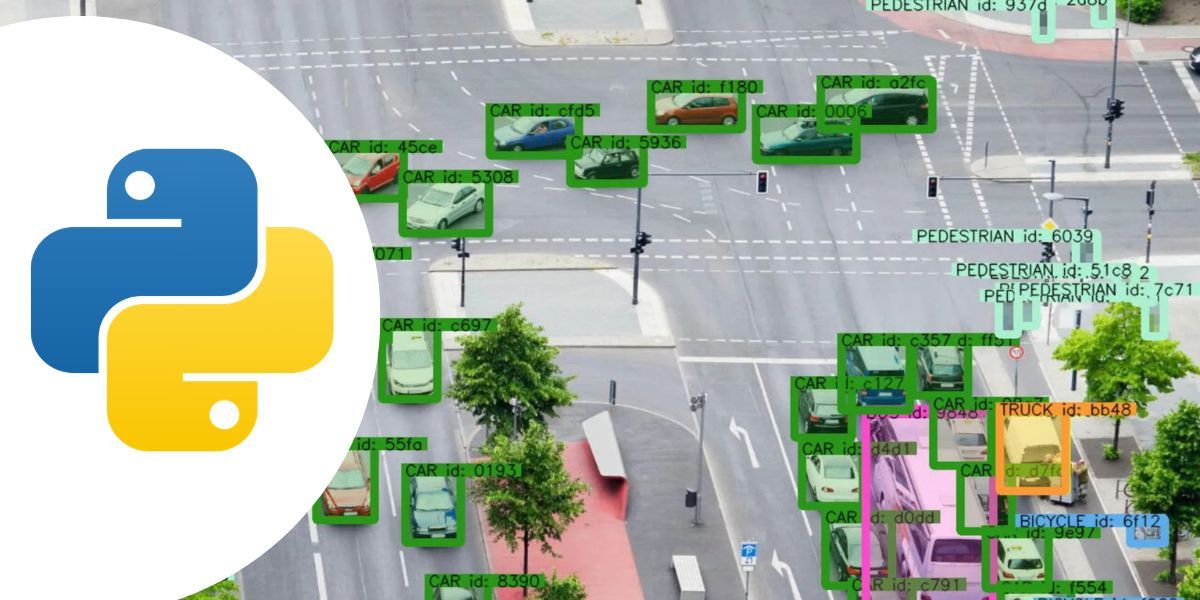
Object Detection and Tracking with YOLO
Dive into the world of computer vision with this beginner-friendly, project-based course. Learn how to leverage the powerful YOLO (You Only Look Once) architecture to build real-time AI applications from scratch. Through hands-on exercises, you will master everything from running pre-trained models and creating custom datasets to implementing robust object tracking. By the end of this journey, you will have the practical skills to build and deploy your own intelligent vision systems.

Data Science with Python
Master the art of data analysis, visualization, and predictive modeling.
Harga & Pilihan Format
Pilih format belajar yang paling sesuai untuk Anda
Privat (1-on-1)
Selalu tersedia · eksklusif satu-satu, mulai kapan saja
/peserta
Grup Kecil
Kelas kecil 2-4 orang
/peserta
Perusahaan
Harga batch transparan untuk tim
Mulai dari Rp 27.000.000
/batch